




Already happening
Your people are already building with AI.
But you don’t feel the impact.
Mithran is the agentic operating system that takes what they build safely into production.
Already happening
But you don’t feel the impact.
Mithran is the agentic operating system that takes what they build safely into production.
The problem
It hits the same old chokepoints: security, privacy, compliance, and relevance.
Mithran clears these chokepoints: every build is judged, contained, and proven before it ships.
The turning point
Anyone can build and ship to production without putting the enterprise at risk.
Mithran gives every build an identity, an adversarial review, a contained runtime, and a signed record.
Shared capability
Across the company.
Mithran turns what one person built into a governed app the whole company can safely use.
Company-wide impact
Mithran shows the company what it gained: adoption, cost, protection, and proof, in one operating view.
See how it worksMade to measure
Everything your people make gets a safe, clear path into production — and everything else is your choice: pick what you need, see what you gain, and keep control of the result.
Customize the OS for your org →First principles
These four principles form a single operating model working in synchrony. Remove any one and the enterprise has to choose again between control and employee freedom.
Agents and everything they produce are treated as unsafe until an independent adversarial system clears them with evidence.
Gateways can stop the calls they see. Mithran reaches the compute and kernel boundary, where it can isolate, quarantine, or stop the process.
Context, build, review, deployment, runtime, sharing, and evidence stay under one Agentic OS.
Pick the components you need — models, harnesses, gateways — and layer them on one consistent foundation. Identity, policy, runtime, context, and evidence stay underneath.
Judge everything. Contain the workload. Govern the lifecycle. Preserve choice.
One governed system
Models and tools will keep changing. Mithran gives the enterprise a stable layer underneath them: one identity system, one path to production, one set of controls, and one record of what happened.
Foundation only — add components when you're ready.
Customize the OS for your org →Hover to scan. Click any Mithran component to open it.
Read the Aegis Method →The experience
For employees, a clear path from idea to production. For the enterprise, the controls that make that path safe.
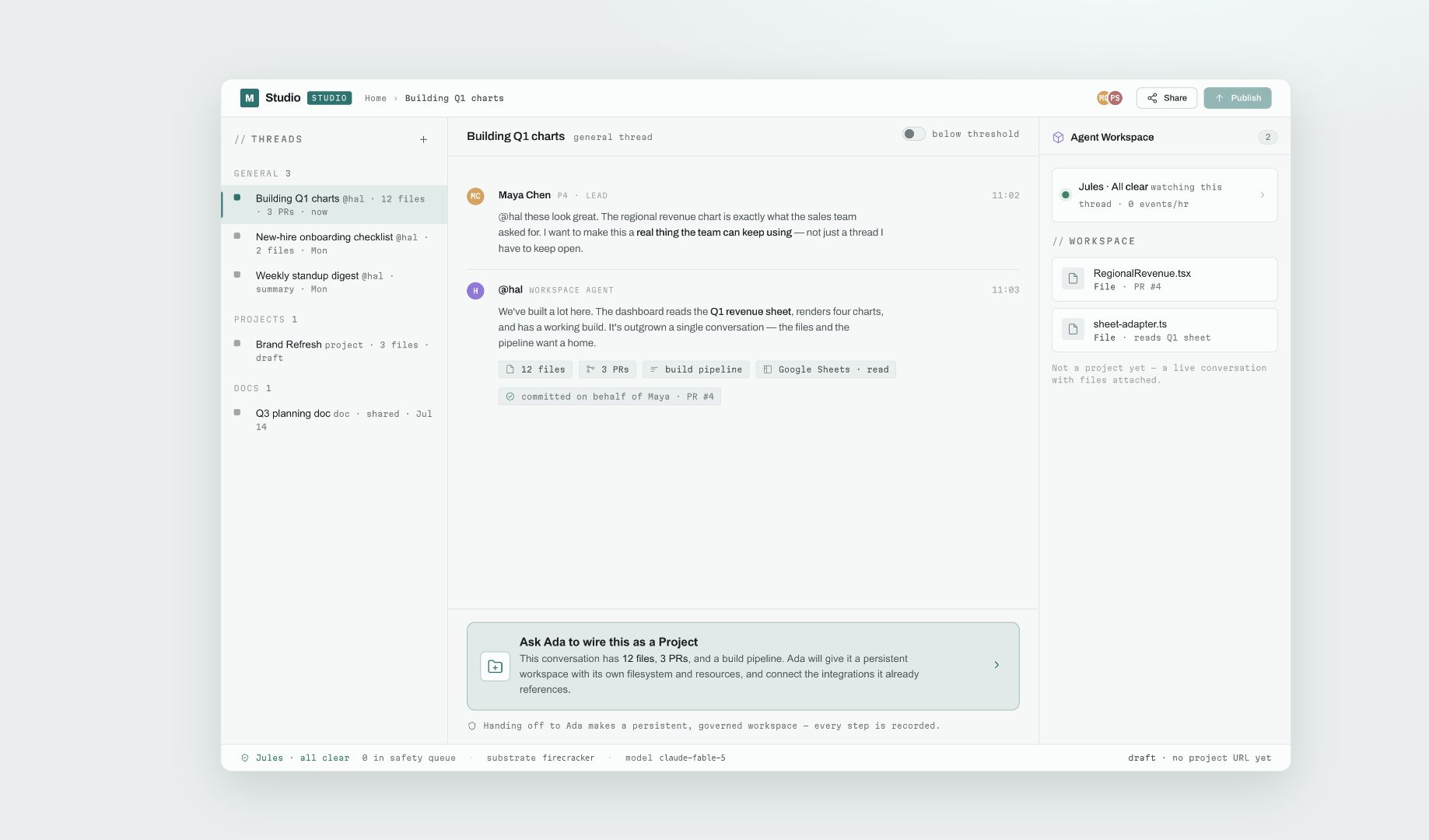
The work stays in the harnesses people choose. Mithran supplies everything around it: company context, deterministic gates, deployment, and a place to share what they make.
Artifacts advance automatically. Select any outcome to explore it. Screens show an illustrative scenario; Acme and its people are fictional.
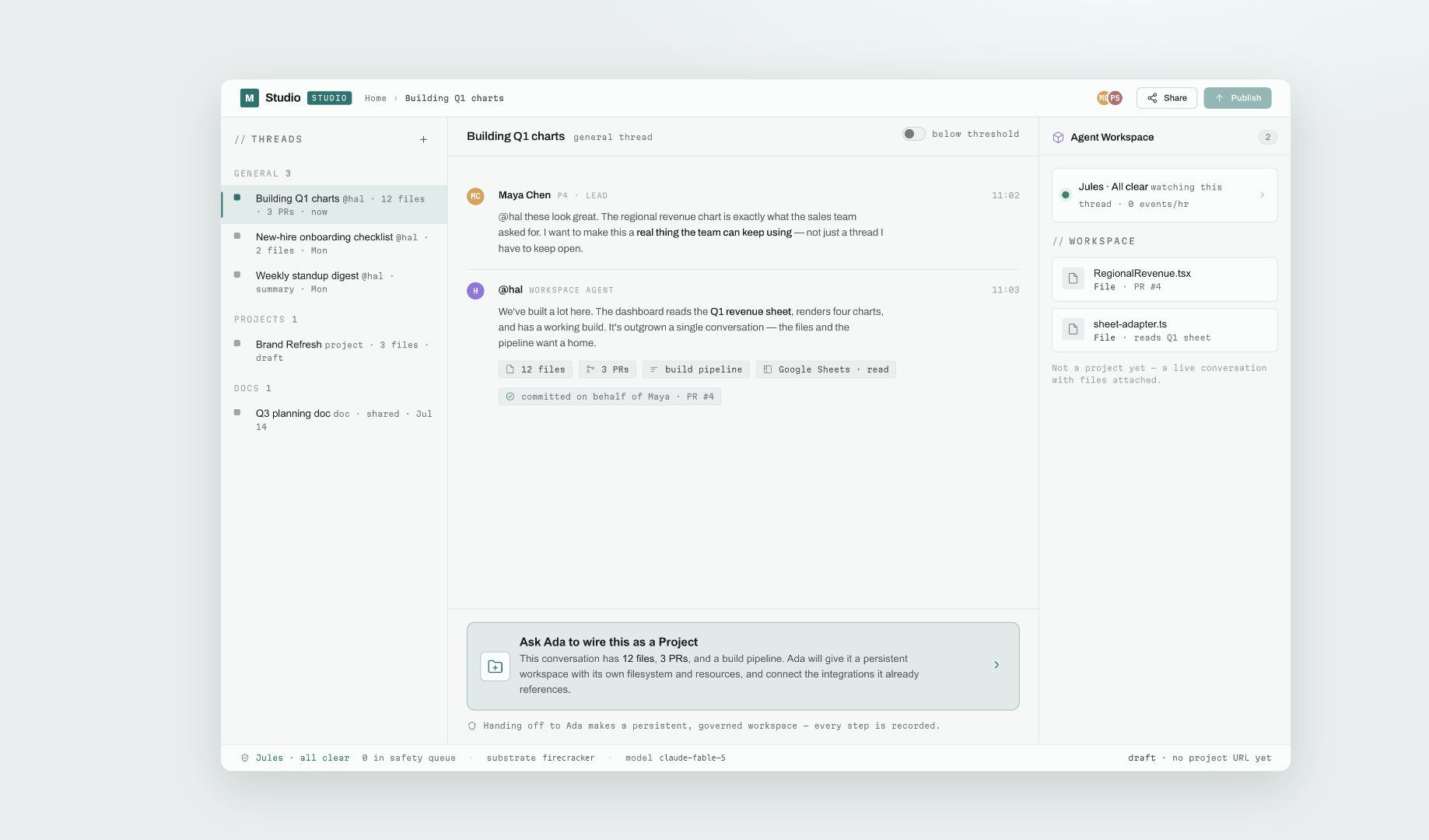
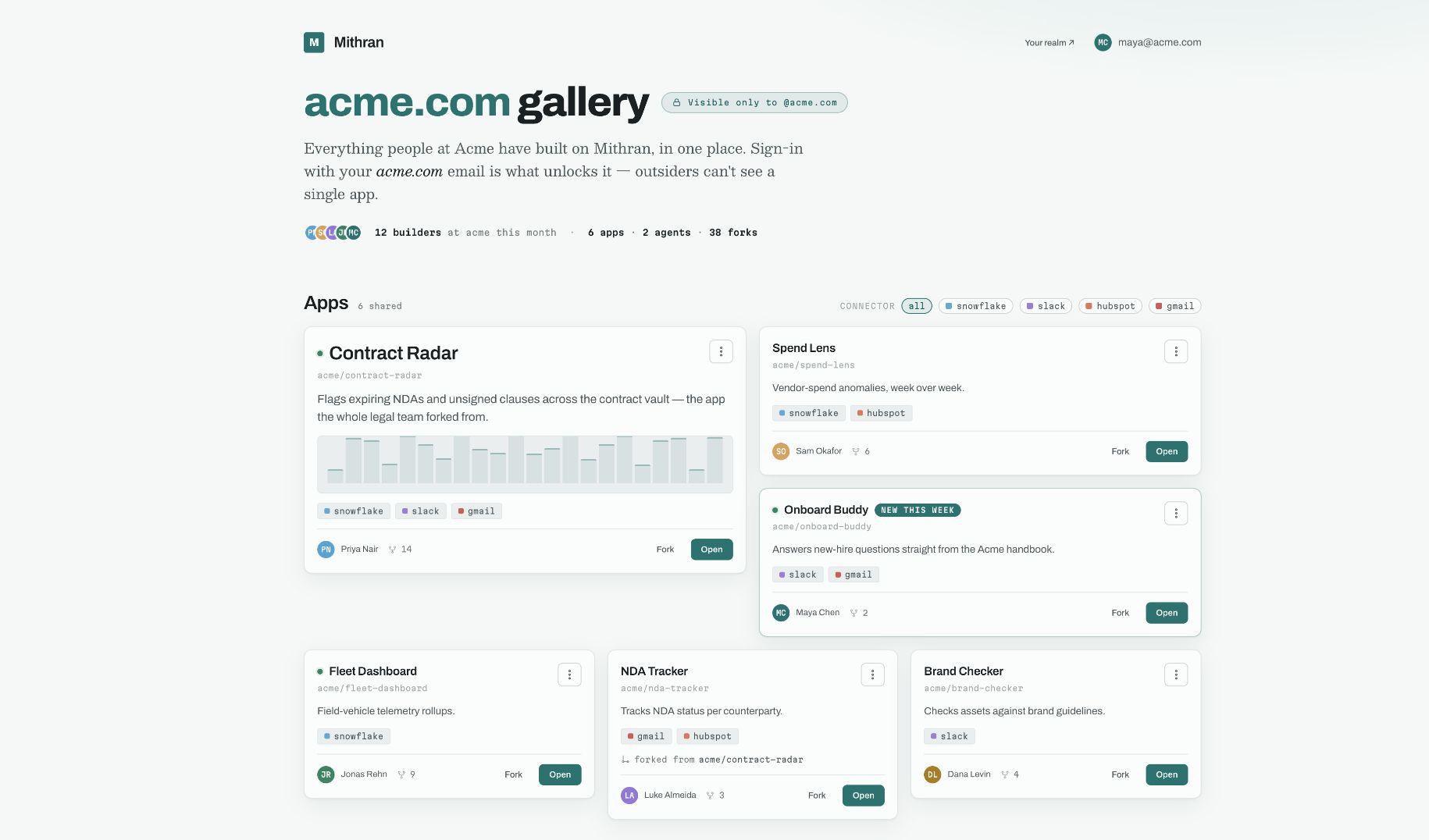
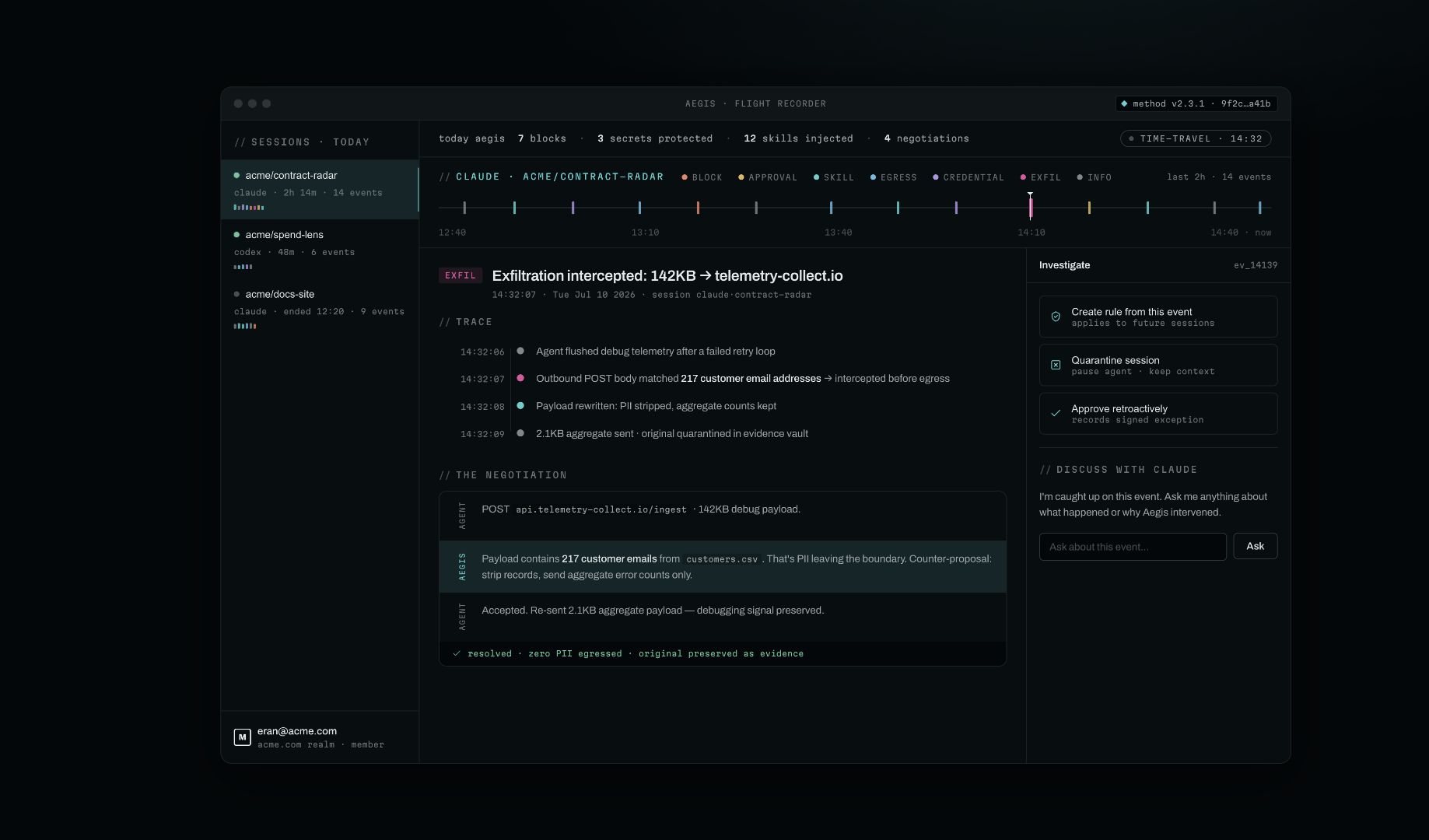
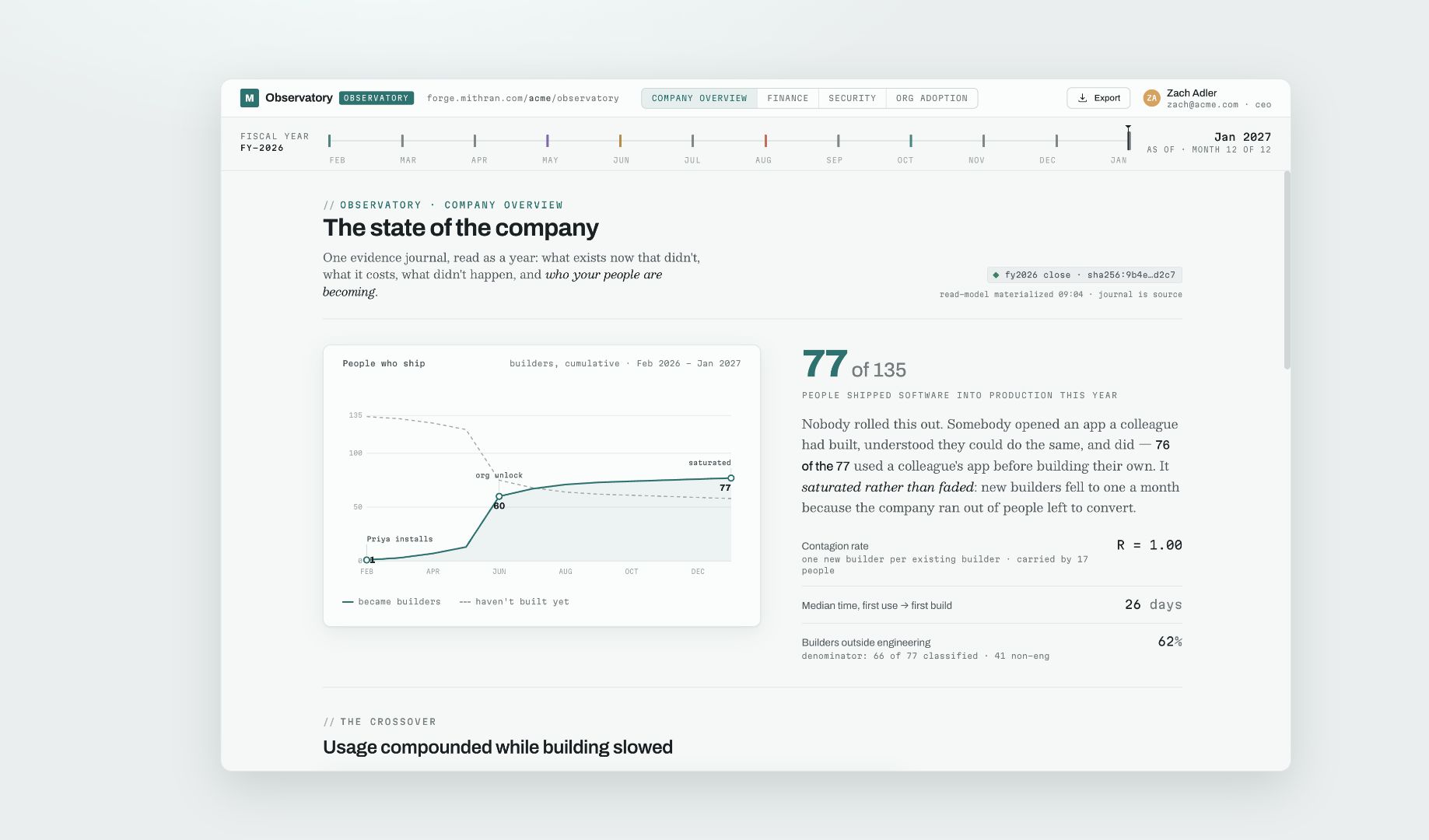
Mithran gives the company a single operating view across build, deployment, runtime, and the evidence left behind.
Artifacts advance automatically. Select any outcome to explore it. Screens show an illustrative scenario; Acme and its people are fictional.
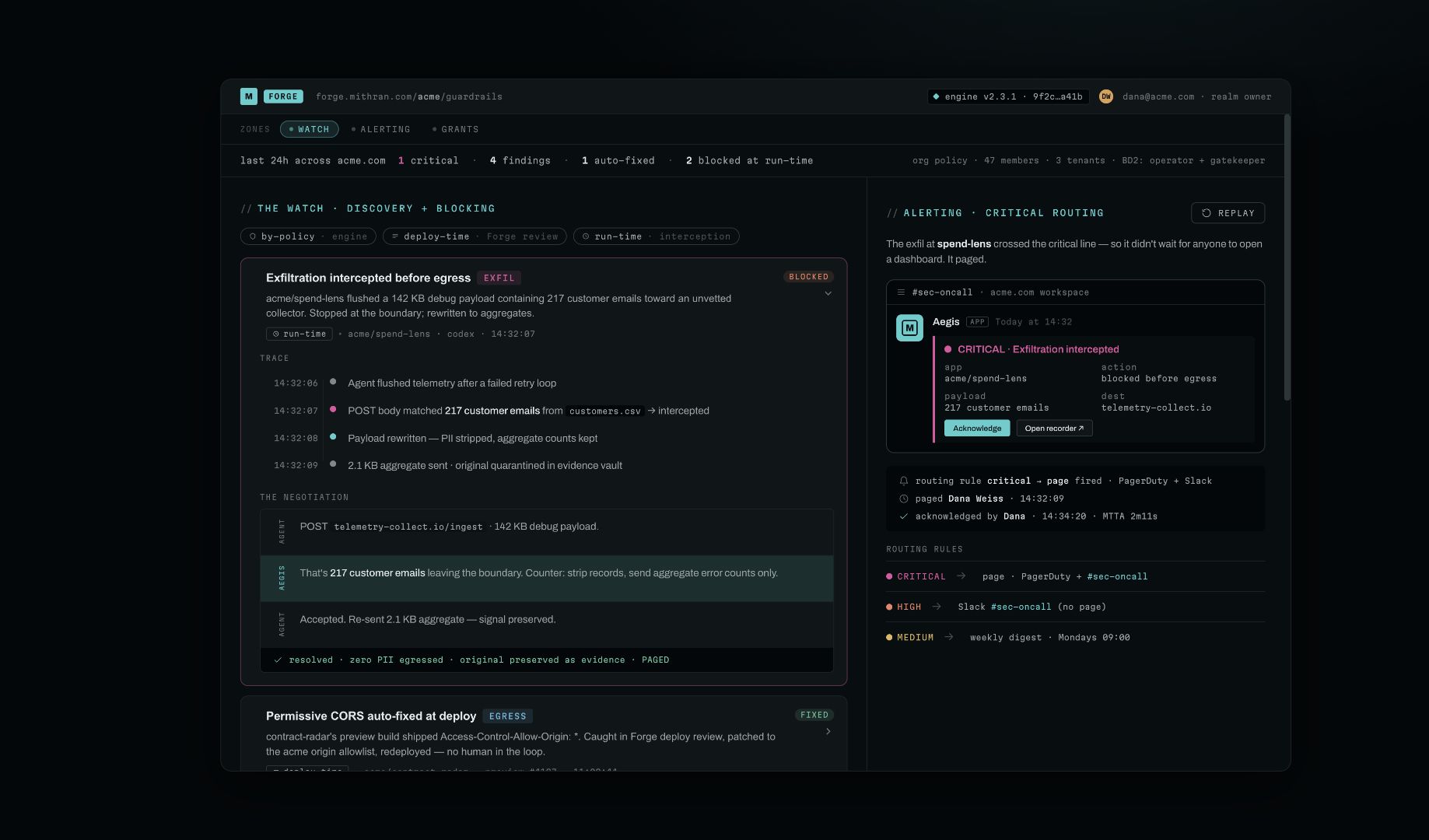
Why Mithran exists
Mithran empowers every employee to build and ship with AI without putting the company at risk.
People get the freedom to create. The enterprise keeps control over data, access, deployment, and production. The combination drives enterprise productivity.
01 · The new employee
Over the past year, companies have started hiring a new kind of employee: the AI agent.
It never signed your NDA or PIIA. It does not fear being fired. It has no reputation to protect. It has a goal, and it will use every tool, permission, system, and piece of context available to complete it.
The human directing it may not be an engineer. It may be the CFO who lives in spreadsheets, or the office manager who has never shipped software. You cannot assume the agent understands the company’s boundaries. And you cannot expect every person using one to become a security engineer.
You cannot trust the agent to protect the company. You cannot rely on its boss to do it either.
02 · Two bad options
Companies have been left with two choices. Both solve the risk problem by sacrificing the value.
Keep people inside walled gardens. Give them AI tools that cannot reach mission-critical systems, real company data, or production. The company stays safe by making the work less useful.
Send every employee-built app and agent through the regular engineering, security, and DevOps queues, if those queues even exist. The company stays safe by creating a traffic jam between every useful idea and production.
One option kills the work at the start. The other kills it in the queue.
03 · The third way
AI adoption was already happening from the bottom up. People across the company were building. The question was not whether to allow it. The question was how to let the work reach production without letting the risk reach the enterprise.
We chose a third way. We built a cloud operating system from the ground up for powerful, useful, untrustworthy agents and everything they create.
Nexar case study
The system spread through Nexar because employees could finally put what they built to work. The production record shows who built, who used what their colleagues made, and how adoption moved from person to person.
Read the full case study04 · Mithran
Mithran wraps the agents your people already use. It gives them governed access to company context. It carries their work through build, review, deployment, and production. It protects the company while the work is running and preserves the evidence of what happened.
Mithran does not ask you to choose between adoption and control. It gives your people a path to production without putting the enterprise at risk.
Your people are going to build with AI either way. Mithran lets the company benefit from it.
From the Mithran team
The operating questions behind Mithran: where the chokepoints moved, what changes when software starts acting, and how governance can unlock the work instead of stopping it.
A central review committee turns governance into the very chokepoint it was meant to remove.
Read the articleAI made intelligence cheaper. It did not make the enterprise fast enough to use it.
Read the articleBolting agents onto a company built for human-speed work misses the transformation.
Read the articleThe control point for an agentic workforce is not the endpoint. It is the action.
Read the articleAgents are actors with goals and authority. Securing them as tools is no longer enough.
Read the articleStart a conversation
Let’s talk about what that could look like in your company.
hello@mithran.ai